Category: Autistic Creators

This category is designed with autistic creators in mind. While not every post focuses on autism as a subject, each considers the autistic perspective.

  • Building an Inclusive Twitch Community: A Neurodivergent Streamer’s Guide

    Building an Inclusive Twitch Community: A Neurodivergent Streamer’s Guide

    When you set up your Twitch stream, one of the first tasks you’re assigned is to set your chat rules. If you’re here, you’ve probably already decided that you want to stream, so let’s get into it. Twitch’s official channel has straightforward rules: “Be kind”, “Respect other humans”, “Include everyone”, and “Listen to the moderation team” (Twitch). Another common rule to see on Twitch channels is “no hate” or “no hate speech.” In this post, we explore these rules and more, and how your rules will build an inclusive community from day one.

    Beyond “No Hate”: Cultivating Uplifing Language
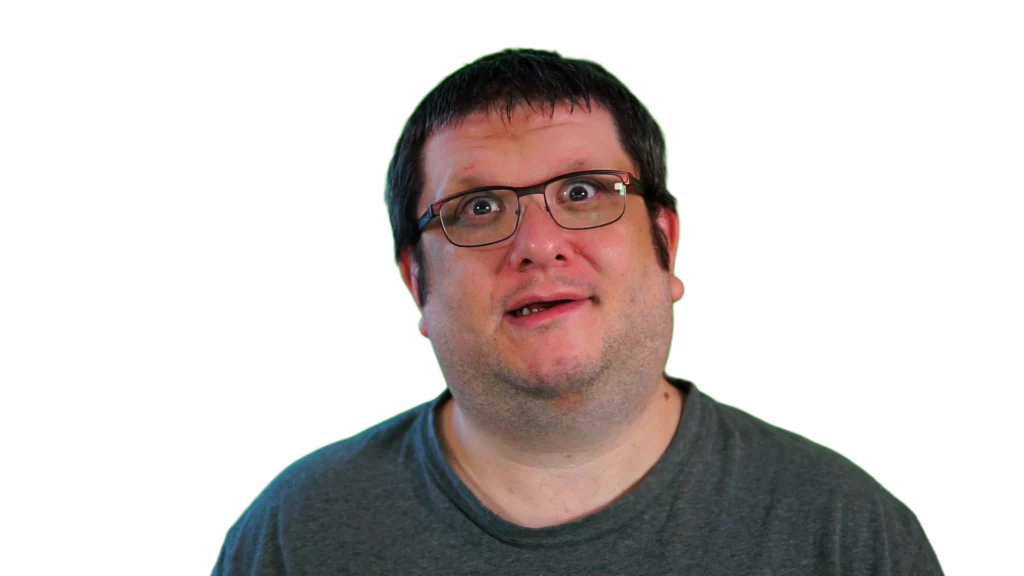
    An image of Ozject making a weird face.

    No hate is a great place to start, but at its core, it is notinclusive. The absence of hate is not the act of including others. The “no hate” rule on my channel reads as follows: “Only use uplifting language in chat.” It exists the first time people click the chat box in another form: “Say things meant to uplift others—not tear them down.”

    Inclusivity means more than banning certain language—it is actively fostering an environment where people feel safe. Although we are online, we still want to be true to ourselves, and autistic people know full well how dangerous masking is—we won’t allow people to push masking on others. I am always on the lookout for better ways to highlight inclusivity in my rules, so the wording changes, but the idea never does.

    There is a bit of a personal backstory to this as well, and I’m sure other neurodivergent streamers will see themselves in these reflections. Being a late-diagnosed autistic adult means I spent my childhood as an undiagnosedautistic child. I was a constant victim of ridicule and exclusion. I spent recess in the quietest corner I could find, often reading, drawing, or daydreaming. I dreamt I could fly, giving me the wings I needed to escape the noise of the playground. Bullies, the natural enemy of imagination, saw me in my dreamlike state and encircled me, tripping, pushing, and one repeatedly “gleeking” in my face (gleeking is the act of forcefully spraying saliva from under one’s tongue).

    It should come as no surprise then, that online bullies find no patience, no lectures, no platform in my channels. Instantly banned and we move on with our lives.

    Crafting Rules with Clarity and Empathy
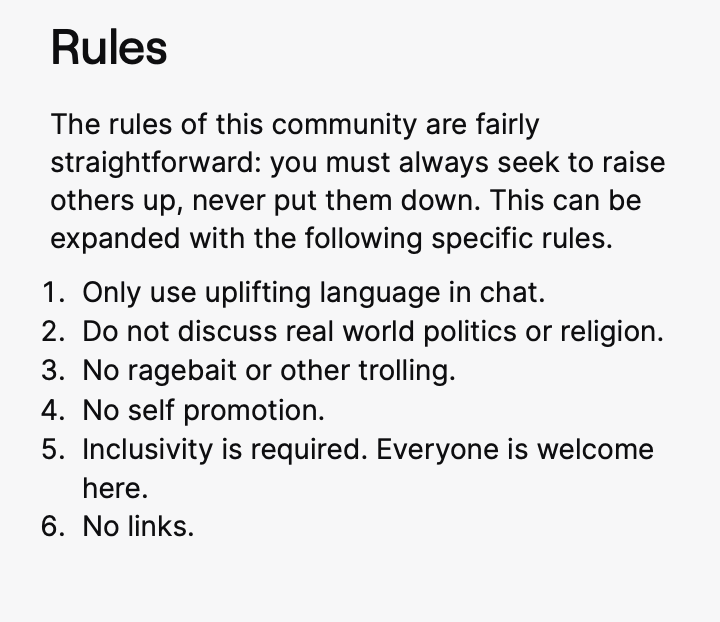
    A screenshot of Ozject's Twitch rules.

    Depending on your comfort in front of a camera, rules that feature compassion might look quite different. What’s important, though, is that your rules are clear to you and your community, and that compassion and understanding are clear drivers.

    I haven’t yet felt the need to include language about the types of hateful content (racism, sexism, transphobia, ableism, etc), because I feel that the first rule encompasses all of those. As I write this, I realize that this could be a reflection of my privilege, not having had to face the majority of those situations. If I want to consider myself an ally of marginalized groups, I probably shouldcall out specific things as examples of unreasonable conduct. Even my disability isn’t always immediately apparent on camera, so that might be an important adjustment for me to make. Looks like I just signed myself up for a new project this week.

    Rules specific to your neurodivergence may also be helpful. I do not like playing multiplayer games with viewers. I prefer to solo queue, or play with my kids, and the very thought of inviting people from my stream to play with me fills me with absolute dread. I find this to be far less common on Twitch, and more of an issue on TikTok, but if playing with others is something that bothers you, putting it in your rules gives you something to fall back on when people push, or ask just once too many times.

    Your rules are a way to expand on other boundaries or triggers you might have. I personally don’t mind backseat gaming, but I see a lot of people with rules explicitly stating no backseating. I find politics exhausting and I do not feel that a gaming livestream is an appropriate place to discuss political issues. For that reason, all real-world political discussion is banned in my community. Besides politics, nothing fractures communities as much as religion, so religious topics are also banned. Again, they’re exhausting. I’m here to have fun, and I took one theology course in university—I’m not an authority on anything religious.

    Twitch shows users your chat rules the first time they try to chat in your channel, but it can be tricky to find after that. For this reason, I recommend having your rules in your Twitch panels, and maybe even have a !rules chatbot command, if you use a chatbot.

    The Art of Moderation: Corrections, Bans, and Compassion
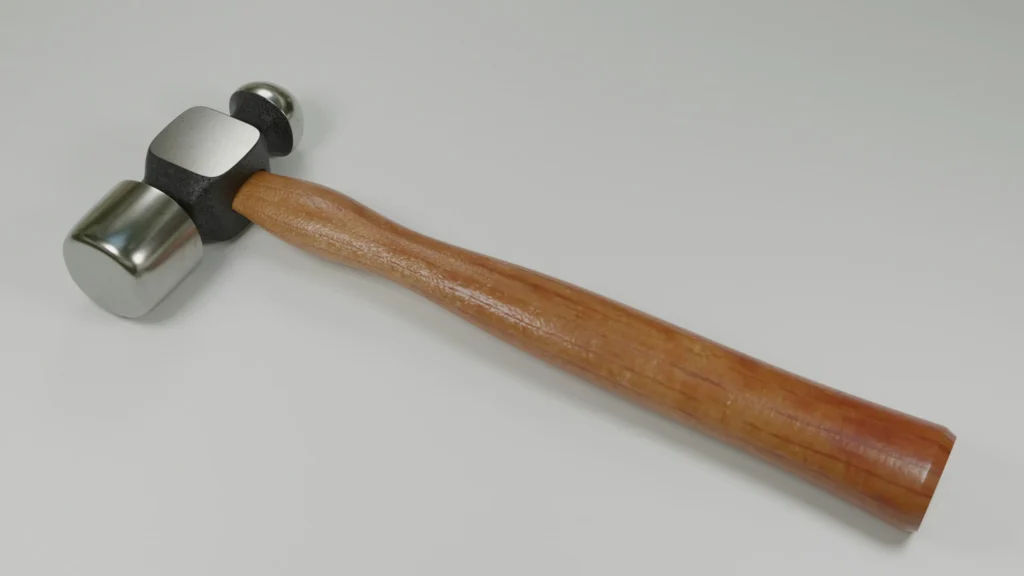
    An image of a hammer.

    Set the tone. Lead by example. It starts with you. There is no shortage of phrases that emphasize the importance of the streamer being a beacon of their own rules. Your interactions, reactions, and language will be the first thing that people see, and if they see you breaking their own rules, how can they expect you to fairly enforce those rules? Be true to yourself, be open about who you are, and why your values are so important to you. Demonstrate them, and acknowledge when you falter.If I begin getting frustrated with a game—especially competitive multiplayer games—I quickly find myself exuding that frustration, and sometimes that frustration is directed towards my teammate who has 0 kills, 9 deaths, but won’t switch off Spider-Man and play someone else. If you catch yourself getting frustrated, you can take a breath, take a break, or walk away—play something else, or move to a Just Chatting stream.. something to split yourself from the source.

    Whether you self moderate your channel or have a team of moderators, it’s important everyone involved has a consistent pattern. Do you want zero tolerance for some behaviours? Warnings and timeouts for others? If you’re a small streamer with no mods, or if you’re a larger streamer with a team of mods, you and your mods are usually your number one fans. Above all else, you want to make sure you and your mods are having a good time.

    If your mods spend the entire stream timing people out and issuing warnings, how are they enjoying your stream? Warnings are good for minor, less disruptive infractions, but I am a big proponent of ban and move on for anyone who has made a choice to break your rules. This means they clicked accept and chose to break those rules anyway—in my mind, that’s an easy ban.

    That said, we should also try and assume positive intent when things are unclear. I streamed during COVID, and there was an influx of people who would enter a stream and ask, “Are you vaccinated?” These people weren’t trying to start a positive conversation—they were looking to start fights. There is no assume positive intent in some cases, but if someone in chat comments that the Spider-Man hasn’t done anything useful this match, that’s likely not cause for an immediate ban. Like you would catch yourself, use this as an opportunity to have a discussion about how you could phrase that in a more constructive way. I like to always assume everyone in the match is watching the stream, so if I say “This Spider-Man is buns and needs to quit Marvel Rivals” (I just learned the new slang “buns” by the way), I’m not using language that uplifts anyone. Maybe he’s still learning Spider-Man, or maybe someone on the other team is particularly good at targeting Spider-Man players, and this player was doomed to have a poor ratio from the beginning. My favourite character to play is Wolverine, and sometimes after seven matches of playing Tank or Support because nobody else would, I tell myself this match I’m playing Wolverine and I don’t care if we lose. Spider-Man could have gone through the same thing, but we will never know. So, instead, we assume positive intent and if we have to say something, we find something constructive to say, or we just don’t say anything.

    When using the timeout, warn, or ban features, it’s important to communicate exactly why it happened. Your repeated comments about the Spider-Man player, despite a reminder of the rules, has led to a timeout for the remainder of the stream today. Next time, please come back with an attitude that is not in conflict with the “respect everyone” rule.

    Handling Conflict: A Neurodivergent Approach

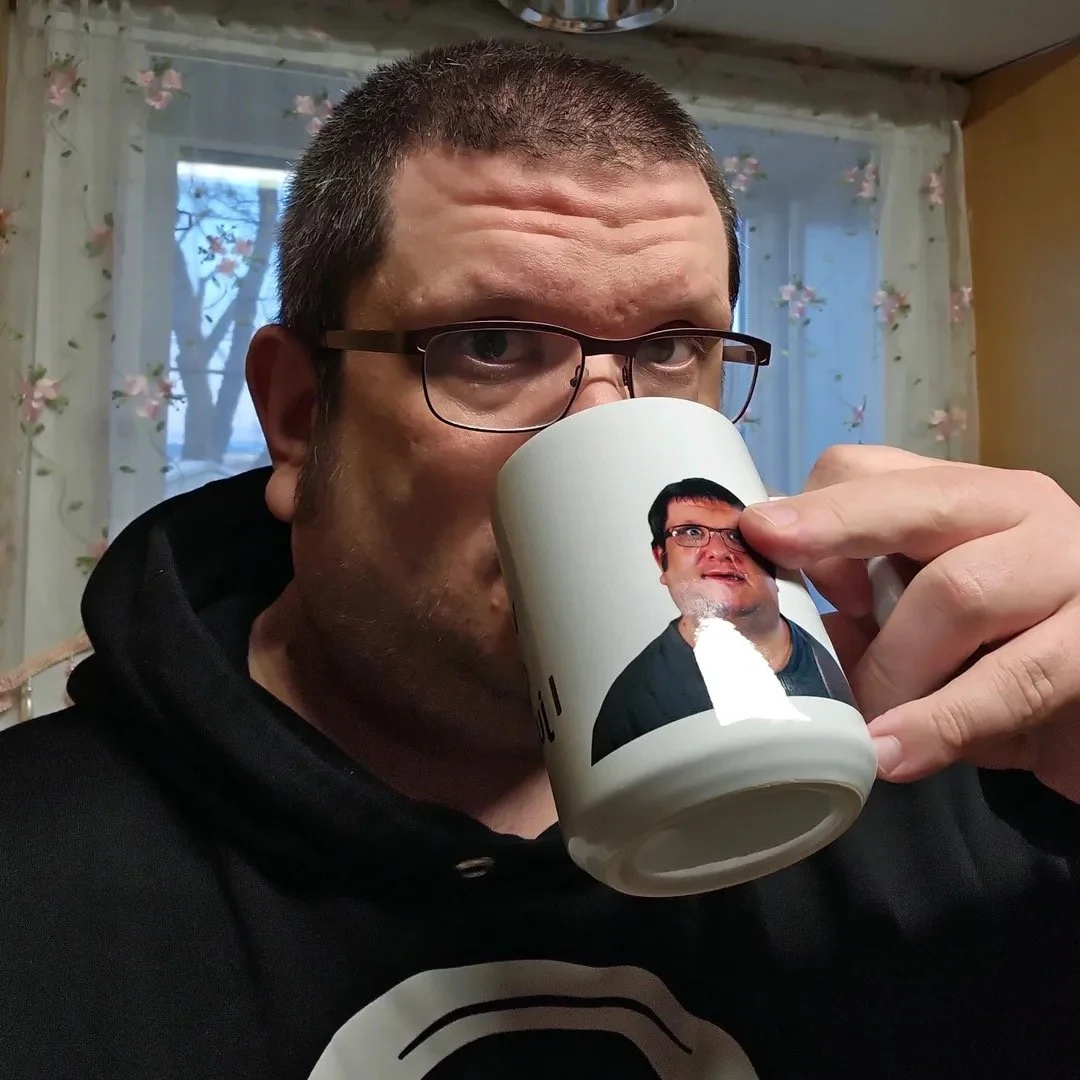
    An image of Ozject drinking from an OzMug

    The Internet is a diverse place and you are bound to be someone’s first neurodivergent creator. And that person might not recognize or understand the needs of a neurodivergent creator, especially if your boundaries are different from others.

    One of my boundaries is I don’t do Discord. I don’t have a Discord server and will not be setting one up. I understand that a lot of people value Discord for their communities. I did just find out about Discord Forum channels, which is actually somewhat exciting, but I need to do a lot more research before I think about that.

    I get people repeatedly asking about Discord. I explain that my autism makes the idea of Discord very overwhelming and uncomfortable. The counterargument is well you could have mods who help you, and yes, I probably could. But what’s the point of having a Discord community if I don’t participate in it? Instead, I reiterate that Discord is not an option for me, but here are my social media channels that I douse.. feel free to follow me there.

    Misunderstandings are a great opportunity for education, but only when the subject is open to it. As you get to know people, you will quickly learn when a misunderstanding can be a teaching moment, and when it deserves to be resolved quietly. Don’t forget to consider that you could have misunderstood the viewer as well, so do seek clarification when things are unclear.

    Conflicts, even between a streamer and a viewer, can be exhausting, especially for neurodivergent creators. I’ve found it valuable to take my comfortable stream time and reduce it by 30-60 minutes—so in my case, I stream 2 hours instead of 3 hours. The offline hour allows me to reflect on the stream, and not just conflicts but also what went right, what went wrong, if I need to adjust any settings.. it’s a time that I’m offline, but still connected to the stream, processing what happened and fixing any mistakes—or planning to fix them for future streams.

    Final Thoughts: Cultivating Your Unique Community

    You don’t need to get political to see the state the world is in today. We all need a pocket of positivity to rely on, and that’s one of the things I try to do in my community. I’ve never understood the value of toxicity when all it does is brings people down. With these thoughts, I hope to provide a better understanding of my own stream and help other neurodivergent creators to be leaders of a new wave of positivity, which Twitch, gaming, and the world desperately needs.

    Have you explored any techniques for fostering a welcoming and inclusive community? What specific strategies have you found most effective in building that community on your streams? Leave your answer in the comment box below.
    References

    1. Chat Rules for the Official Twitch Channel, Twitch.
  • What makes Autistic Streamers Different?

    What makes Autistic Streamers Different?

    I started streaming in 2015, but I only received my autism diagnosis in 2024. In those nine years, I did a lot of things that streamers are supposedto do, but didn’t work for me, which often led to long breaks and an on-again, off-again presence on streaming platforms. It wouldn’t be until my diagnosis that I would start to understand exactly what things caused me problems, giving me the tools to come up with alternatives—or to simply go without.

    Autistic streamers face the same challenges as any other streamer, but some of the most common pieces of advice you see for stream growth go against some common autistic traits. So, with that as the intro, let’s explore what makes an autistic streamer different, and why you should follow them and be a part of their community anyway.

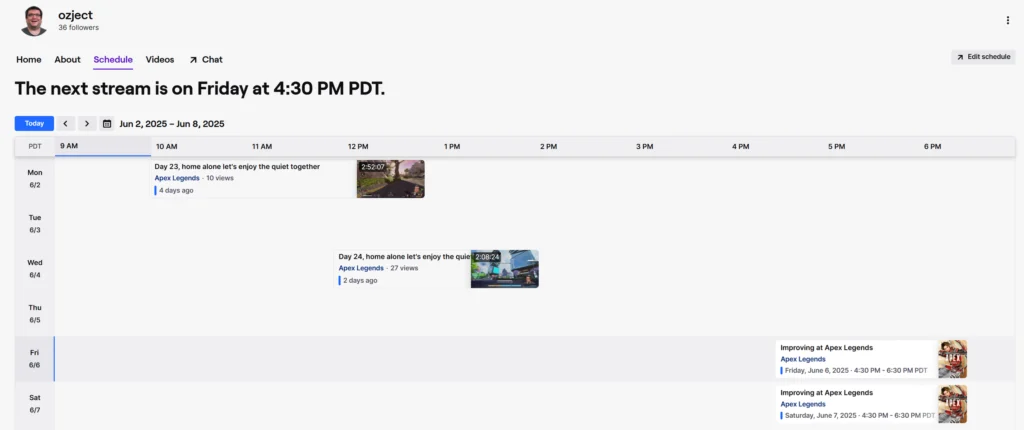
    A screenshot of an example of a Twitch schedule autistic streamers might use.

    The First Challenge to Autistic Streamers: Setting a Schedule

    One of the first pieces of advice you see in any streaming guide is “prioritize audio,” but right after that is “set and keep a schedule.” Schedules are great for an autistic individual’s possible need for routine, but that routine is probably mapped out for the entire day, not just the streaming time. Further, any interruption during the day can lead to distress (Levine). I know if I’m not fifteen minutes early for my stream, I start to panic because I need about fifteen minutes to test my audio, set my YouTube description, test my audio, and mentally prepare myself to go live. How sensitive am I to lights today? Since I use two key lights while I’m live, there’s a delicate balance of lights needed to maintain the quality of my green screen. If something goes wrong, like my audio stops working, and now I don’t have enough time to fix it, I might start to fall out of that routine, and the entire stream is at risk.

    The solution isn’t necessarily to not have a schedule.. rather, it’s to understand potential barriers and minimize them ahead of a stream. When I had a stream scheduled at 4:30 PM, my son asked me at 3:00 PM if we could go out for an hour. That would allow me my fifteen-minute window, but leave very little time for any complications. However, family first—always. So we went. And traffic was a disaster, and we got home at 4:25 PM. I still went live, but I did audio testing while live and simply explained to my early viewers that I didn’t have time to test before.

    Another factor in setting and maintaining a schedule is an autistic person’s relationship with executive function—or executive dysfunction, in many cases. In children, this may look like missing homework assignments, while in adults, it may mean wearing dirty clothes for a few days because you couldn’t will yourself to do laundry. For this reason, it’s critical that streaming remain a fun activity so it never becomes viewed as a chore.

    A painting of the OzHole with a sunflower and Xbox and PlayStation buttons.

    Streaming is a Social Activity

    Although streaming is a type of social interaction, it’s much more along the lines of parallel play, which is generally autistic friendly. Parallel play is simply defined as playing alongsidesomeone, not withthem. Dr. Regan describes it in a way I really like: a couple is having coffee together but one is doing a crossword while the other is reading a book (Regan). They still had coffee together.

    Autistic creators can utilize a love of parallel play in most video games. Viewers who are either playing themselves, who have played, or who are interested, will enjoy sharing their experience, knowledge, or anticipation with the streamer. This is not unique to autistic streamers, but will give streamers like me a special kind of satisfaction as this type of play is so much more rewarding than cooperative or collaborative play.

    Other social elements to streaming, like reading chat, can be challenge areas for the autistic streamer. But anyone who has decided to be a streamer has probably considered the challenges in reading chat. I use SpeechChat so I don’t miss messages—it reads them into my headphones, but it really only works as a beginner tool. Once you have an active chat, it can be very disruptive and overstimulating.

    Setting Boundaries

    I recently tried setting up a Discord server, only to quickly realize that it was having a negative impact on my mental health. Knowing that I would need to check it every day for inappropriate content, and that anything could happen when I was asleep, left me overwhelmed instantly. I could revisit a Discord server once I’m a big enough streamer to have a team of trustworthy mods, but as a small streamer who isn’t making a living at it, it’s just not feasible for me.

    When you have a boundary that isn’t respected, it can trigger the fight or flight response—especially flight. My current run is not my first run at streaming—in 2021, I had built up to around 15 average viewers on Twitch, peaking at over 25, and was seeing growth with every stream. I had a big Discord server and a schedule that I was able to stick to. But without a diagnosis, I lacked the tools and understanding of my limits, and I didn’t recognize what it meant to be disregarding my own boundaries, and when fight or flight kicked in, I deleted everything—my Twitch, YouTube, and TikTok channels, all my social media. Collectively around 30,000 followers across each platform. Now, with the tools in hand, I’m slowly rebuilding. Even a few of my regulars from back then have found me again, but it’s a constant reminder not to exceed my limit, and recognize when a piece isn’t working and cutting it out early, rather than letting it fester.

    A screenshot of Twitch chat rules

    A Positive & Inclusive Space

    With autism comes a strong sense of justice and morality (Autistica). I don’t have a lot of rules on my stream. The first rule is that every comment should be made to lift others up, not put people down. The other is to keep real world politics out of our safe space. When playing games like Apex Legendsor Marvel Rivals, which have notoriously toxic communities, being a beacon of smiles and positivity is how I differentiate myself from others. In a game where you can go into any stream and hear someone’s mic peaking while they shout, “Get shit on!” I want to be the streamer where whether I win or lose, it’s “good game.” When a teammate is doing something I don’t understand, and I ask, “What is our teammate doing?” It’s because maybe he knows something we don’t know—I’m trying to learn. Sometimes you learn that the teammate didn’tknow what they were doing, and in that case they’re probably trying to learn too, so let’s assume we all learned something and move on to the next match.

    I would be doing a disservice to the LGBT+ community if I were to compare an autistic’s experience in society to that of a trans woman. However, I think it’s fair to say that both neurodivergent and trans people have their own struggles fitting into modern society. This is not about comparing, but about understanding that everyone needs a place to feel safe, and when everyone is a username, a profile picture, and a line of text, there are no barriers to being inclusive. Going back to the first rule of the stream, using language that lifts people up—there’s no place for bigotry here.

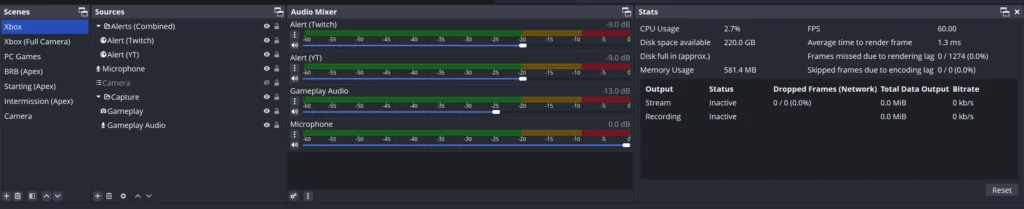
    A screenshot of OBS, showing scenes, sources, audio mixer, and stats panes.

    Autistic Special Interests

    If you find an autistic person with the same special interest as you, you’ll find a best friend for life. In addition to a Bachelor of Fine Arts in Creative Writing, I also have a Master of Business Administration—and my specialty was Technology & Innovation, with a secondary specialty in entrepreneurship. In fact, my MBA capstone project was a business plan for streaming, where I did a deep dive into every aspect of being a streamer from the angle of running it like a business.

    My special interest in all things streaming has been somewhatcostly. I’ve owned nearly every product Elgato has come out with and have used several AverMedia products as well. My current setup includes two Elgato key lights, an AverMedia GC575, an Elgato 4K X, a Shure SM7B, a Sony a5100 with a Sigma lens, and an Elgato green screen—plus a bunch of accessories on top of those. I have spent years hand selecting each piece of equipment for its specific purpose within my stream, and while some parts are underutilized (looking at you, Stream Deck), overall I’m quite happy with my setup. I have a drawer behind me with old cameras, old microphones, and some old capture cards that I should probably sell, but I always think, what if I need it one day?

    On the Ozject Media site, I started the blog with the goal of discussing autism. I called it the OzBlog, but it never really grew into what I had envisioned. I briefly thought about doing poetry, utilizing my BFA there, but found poetry both too personal and too depressing to produce regular content with it. I stream from the basement of my house, a little alcove I call the OzHole. I came to realize as I refined my approach to content creation, that the OzHole would make a great name for a blog about streaming. And since this site’s purpose is to ultimate sell streaming plans/outlines to autistic adults, posting free blog content of the same topic makes the most business sense.

    If you come into my stream with questions about streaming, I am always happy to answer them. When I was starting out, I remember Mixer getting big and wanted to migrate to Mixer, as this was before my Twitch had ever seen any growth. I joined some Mixer streams and started asking streamers about bitrate on Mixer compared to Twitch, and as you might imagine, I got banned from several channels because streamers seemed to frown upon the idea of discussing streaming during livestreams. Right or wrong, I didn’t like that. So when someone asks me about equipment or settings, I take the time to discuss it. I don’t view others streamers as my competition—I view them as my colleagues. Gatekeeping doesn’t make sense. Reddit and other creators have come a long way since the early days of Mixer, and most information you need is readily available on Google—but this wasn’t always the case. There’s a reason the simplicity of Streamlabs drove a lot of people to that platform.

    References:

    1. Autism: The challenges and opportunities of an adult diagnosis, Hallie Levine, Harvard Health.
    2. Autism and Relationships: Parallel Play in Adulthood, Dr. Theresa Regan, Autism in the Adult.
    3. Autistic Strengths, Autistica.